Wisdom Wednesday
Wisdom Wednesday: Lessons from the Front Lines of Climate Justice
April 1, 2026

Jane Fonda & I at a Jane Fonda PAC Fundraiser
It’s Wednesday, and usually, we’re talking about spreadsheets, org charts, or how to stop your middle managers from fleeing to the competition like they’re escaping a sinking ship. But today, I want to talk about red coats, plastic zip-tie handcuffs, and an 88-year-old icon who is currently showing more "disruptive energy" than most Silicon Valley founders I know.
I’m talking about Jane Fonda and the Fire Drill Fridays movement.
Now, before you tell me, “Christopher, I’m a CEO, not a protestor,” hear me out. Leadership isn’t just about steering a ship in calm waters; it’s about having the moxie to change the ship’s entire engine while you’re in the middle of a gale. Environmental justice (EJ) isn't just a "nice-to-have" CSR initiative anymore. It’s the new frontier of high-stakes leadership, and if you aren't paying attention, you're not just behind the curve: you're off the map entirely.
The Boardroom vs. The Front Line
Let’s set the scene. Imagine I’m sitting across from a hypothetical client, let’s call her Corporate Chloe. Chloe is a brilliant leader: sharp, efficient, and capable of squeezing efficiency out of a dry sponge. But she’s a bit stuck in the "business as usual" loop.
👔 Chloe: "Christopher, I get it. The planet is warm. We planted some trees for Earth Day. We even gave out those reusable straws that everyone hates. Can we go back to talking about our 30-day breakthrough outcomes now?"
🔥 Me: "Chloe, my friend, those trees you planted? They’re great. They look lovely in the annual report. But they’re a band-aid on a tectonic rift. Jane Fonda isn't out there getting arrested because she likes the food in DC central booking. She’s there because she understands Courageous Advocacy. She’s targeting the root: the 'Big Oil' narrative and the systemic structures that protect it: not just the symptoms. Are you doing the same with your company’s 'environmental soul'?"
👔 Chloe: "Environmental... soul? Is that in the GAAP requirements? Does it help my EBITDA?"
🔥 Me: "It is if you want to hire anyone under the age of 30. If your leadership doesn’t have a pulse on environmental justice, your talent strategy is basically a ghost town waiting to happen. People don't want to work for a paycheck anymore; they want to work for a purpose that doesn't involve watching the world burn."

Who is willing to wear the Advocacy CEO coat?
Lesson 1: Courageous Advocacy (Or, Putting Your Reputation on the Line)
Jane Fonda’s Jane Fonda Climate PAC and her Fire Drill Fridays weren't built on "safe" choices. They were built on the idea that if you have a platform, you have a responsibility to disrupt the status quo.
In the corporate world, we call this Strategic Accountability. Most leaders are terrified of taking a stand because they’re afraid of polarizing their customer base or upsetting a board member who still thinks coal is "the future." But here’s the reality: neutrality is becoming a liability. In a world of instant information, staying silent is seen as a choice: usually the wrong one.
Courageous advocacy in leadership looks like:
-
Challenging Entrenched Interests: Are you sticking with suppliers who ignore environmental standards because they’re "cheaper"? That’s not leadership; that’s accounting. A real leader audits their supply chain with a microscope and a moral compass.
-
Radical Transparency: Don't just report the wins. Tell your stakeholders where you’re failing on your carbon footprint and exactly how you plan to fix it in the next 30 days. People trust vulnerability more than they trust polished PR.
-
Beyond the Greenwash: If your sustainability report is 50 pages of stock photos of leaves and zero pages of actual emissions data, people will notice. Especially the talent you’re trying to recruit.
Check out our leadership development programs to see how we help executives build this kind of backbone.
Lesson 2: Systemic Change Starts at the Bottom
One of the most profound lessons from the front lines of climate justice is that Indigenous and marginalized communities are the ones doing the heavy lifting. Research shows that Indigenous resistance has stopped or delayed greenhouse gas pollution equivalent to at least 25 percent of annual U.S. and Canadian emissions.
Think about that for a second. A group with the least "traditional" power is driving the most significant impact.
In your organization, the "front lines" are your junior staff, your field workers, and your customer-facing teams. They see the waste. They see the inefficiencies. They see where your company’s values don’t align with reality. If you aren't listening to them, you're missing out on the most potent source of disruption you have.
Systemic Change Strategies:
-
Listen First, Design Second: Stop trying to solve environmental impact from the mahogany-clad safety of the C-suite. Hold a "Green Town Hall" and actually listen to the people who handle your logistics and supply chain. They know where the bodies are buried (or where the plastic is being dumped).
-
Equity-Centered Solutions: Climate justice is about recognizing that pollution hits marginalized communities hardest. Does your corporate expansion plan consider the local environmental impact on the surrounding neighborhood? If you're building a data center that sucks up all the local water, you aren't being "innovative": you're being an extractor.
-
The "Livable Planet" Operating Model: Move your HR Strategy from "how do we survive?" to "how do we contribute?" This means shifting your entire operating model to prioritize long-term ecological health over short-term quarterly bumps.

Gen Alpha & Gen Z looking for the "soul" of a company-not the 401K plan.
Lesson 3: The High-Tech and High-Touch Balance
We talk a lot about AI offerings here at Visionary Consulting. We love the data. We love the efficiency. But climate justice requires a delicate balance of High-Tech and High-Touch.
High-Tech: Using AI to map supply chain inequities, track real-time carbon emissions, and optimize energy usage. This is the "brain" of your environmental strategy. It gives you the "what" and the "where."
High-Touch: This is the "soul." This is the Jane Fonda energy. It’s the human connection, the community engagement, and the realization that behind every data point is a human life and a shared ecosystem.
If you use AI to "save those coins" but ignore the human cost of your environmental footprint, you’re just automating a disaster. True leadership uses technology to amplify human equity, not replace it. Imagine using your AI tools to identify which of your facilities are impacting vulnerable communities and then using that data to redirect investment into local environmental restoration. That's a high-octane move.
Strategic Workforce Planning: Attracting the "Environmental Soul"
Let’s get down to the brass tacks of Human Resources. The next generation of talent, Gen Z and Gen Alpha, aren't just looking for a 401k and a "fun" office culture with a ping-pong table. They are looking for an environmental soul.
They want to know: Does this company care if the world is on fire, or are they just handing out fire extinguishers while selling matches?
If you don't have a compelling answer, you aren't just losing the planet; you’re losing the war for talent. Strategic Workforce Planning now requires an environmental lens. You need to hire for "sustainability literacy." You need to bake environmental justice into your DEI (Diversity, Equity, and Inclusion) initiatives because climate change is the ultimate multiplier of inequality.
When EJ is part of your brand DNA, your recruitment becomes magnetic. You won't have to hunt for talent; they will find you because they want to join a mission that actually matters.
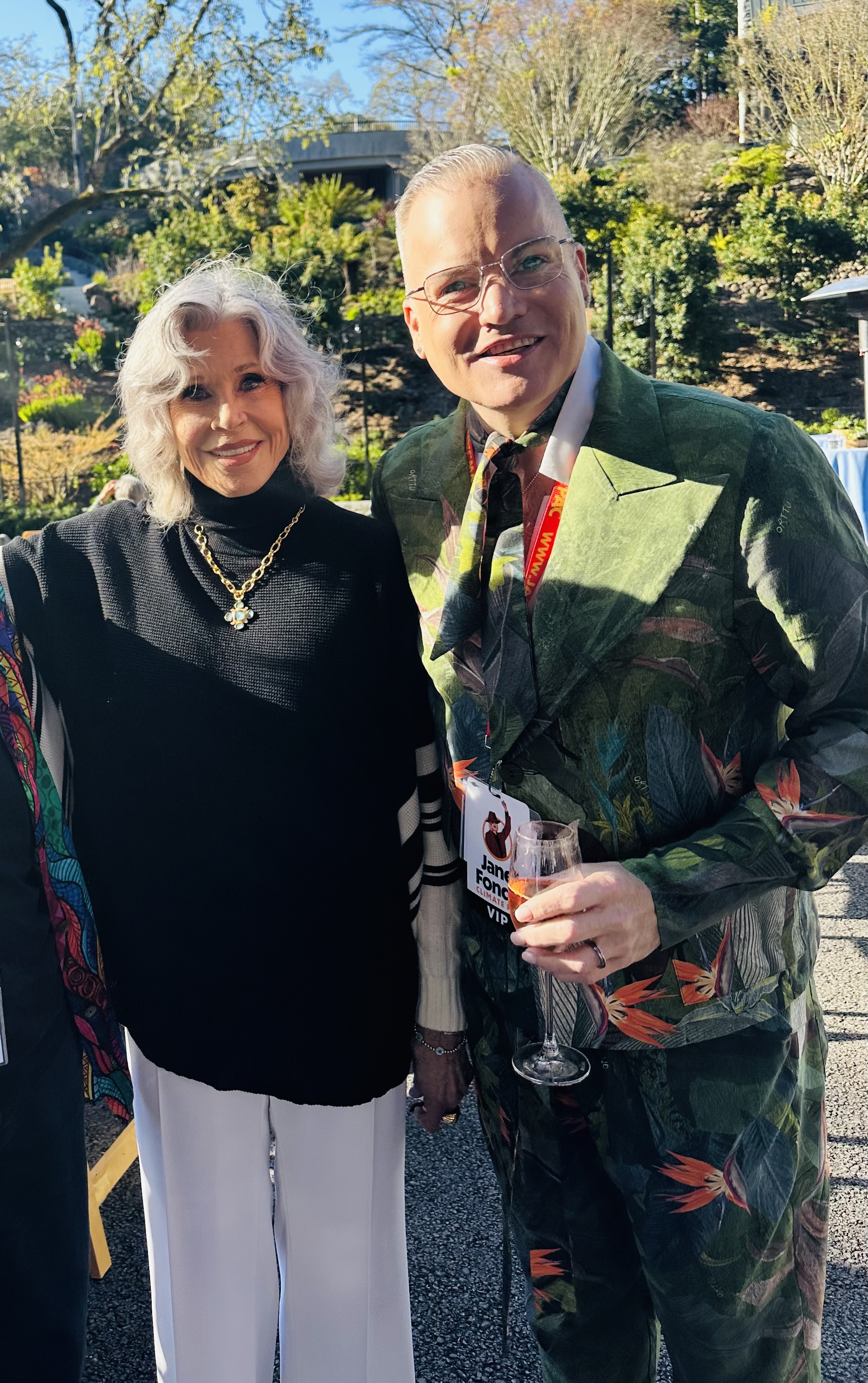
Fundraising for Jane Fonda PAC
The 30-Day EJ Audit: Your Call to Action
In the next 30 days, I challenge you to perform an Environmental Justice Audit on your leadership style. Don't let this be another "nice idea" that dies in your inbox.
-
Audit Your Advocacy: When was the last time you took a stand on an environmental issue that wasn't "safe"? If your answer is "never," it's time to find your red coat.
-
Audit Your Circle: Are you consulting with the communities most affected by your business operations? If your boardroom all looks the same, you’re missing the perspective needed to solve global problems. (Check out our pre-consultation if you need help starting this conversation).
-
Audit Your Soul: Is your company's "green" initiative a PR stunt, or is it woven into your HR strategy? Ask your most junior employees what they think your environmental values are. Their answers might surprise: or terrify: you.
Final Thoughts: The Activist CEO
We are moving into an era where "CEO" and "Activist" are no longer mutually exclusive terms. In fact, they’re becoming synonymous. Whether it’s Jane Fonda on the steps of the Capitol or you in the boardroom, the goal is the same: Systemic disruption for the greater good.
Work shouldn’t just be about hitting quarterly targets and keeping the board happy. It should be a thrilling adventure where we leave the world better than we found it. It’s about having the guts to lead when it’s hard, not just when it’s profitable.
Ready to stop "greenwashing" and start leading with actual gravitas? Let’s get to work. Book a session with us and let’s find your company’s environmental soul.
Stay visionary.
[HERO] Wisdom Wednesday: Harmonizing the Latency Between Your Intent and Your Impact
Ready to talk it through?
Book a free consultation (30 min) →