
WITNESSING GLOBAL INJUSTICE: Honoring World Day of Social Justice February 20, 2026
- Christopher McCormick
- Feb 18
- 7 min read
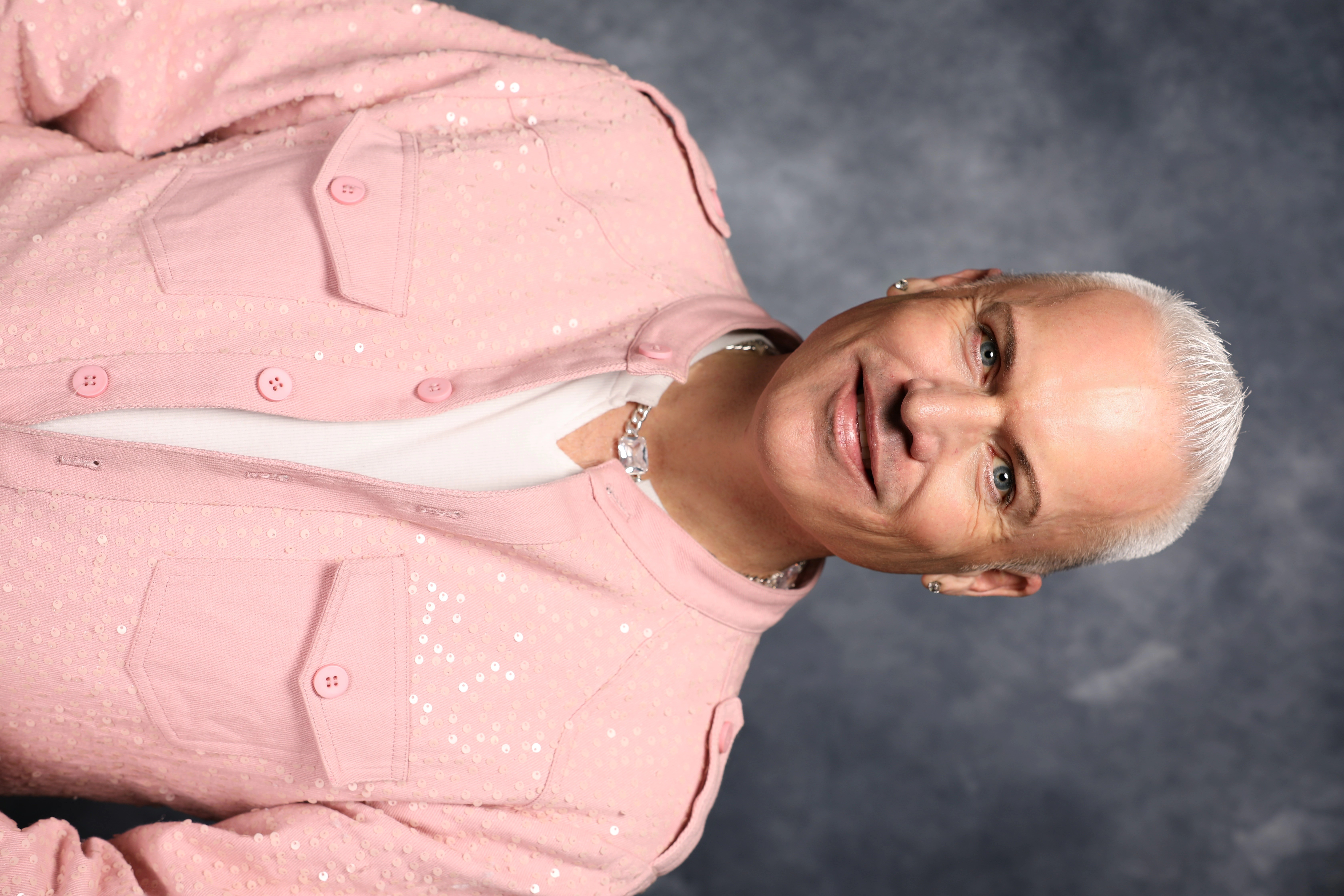
After thoughtful engagement with last week’s piece, we’re grateful to welcome Allan Dombroski back for another Wisdom Wednesday.
Written for World Day of Social Justice, this essay continues the questions Allan is exploring in his upcoming books, Singularity of the Soul and Geometry of the Soul—work centered on dignity, responsibility, and the structures that hold us together. May it spark something within that gives you pause for reflection.
There is something quietly sacred about the word Human.
It carries warmth. It carries recognition. It carries the instinctive sense that we are meant to matter to one another—more than strangers, more than competitors, more than passing silhouettes on a crowded street. Most of us feel that, even if we’ve been trained to pretend we don’t. When someone falls, we reach. When someone grieves, we ache with them. When disaster strikes, help moves across oceans toward people we will never meet. Empathy is not rare; it is genetic. Cooperation is not foreign to us; it is ancestral.
Connection is not a luxury feeling. It is one of the oldest survival technologies we possess.
So why does the world feel so fractured?
If we can sense our shared humanity in our bodies, why do our systems so often contradict it? Why, in a species capable of such care, do billions still live without safety, without reliable healthcare, without stable work, without protection from forces far larger than themselves? Why does inequality widen in an age of extraordinary wealth? Why does instability accelerate even as our understanding deepens?
These are not abstract policy questions. They are continuity questions.
Because social justice is not merely about fairness. It is about whether a civilization can endure—whether it can hold its people together under pressure, rather than splinter into fear, blame, and abandonment.
We inherit a society we did not design—its economies, its borders, its hierarchies, its assumptions about growth and success. We inherit its institutions, its blind spots, its protections, and its violence. And we inherit something quieter than any constitution or market theory: the agreement to accept that inheritance as inevitable.

Every generation is tempted by the same amnesia—that this is simply how things are, that the rules are fixed, that borders are natural, that markets are neutral, that inequality is unfortunate but unavoidable. But borders are lines we agreed to honor. Markets are structures we agreed to regulate—or not. Inequality is the outcome of incentives we agreed to maintain.
Society is not only a collection of agreements. It is also the daily consent to them—the agreement to accept what we are told to accept, even when the terms are brutal and the costs are unevenly distributed.
We did not draft the original contract. We participate in it.
That participation is not always enthusiastic. Often it is survival. When bills are due, when food is scarce, when healthcare is uncertain, when speaking up threatens livelihood, compliance can feel rational; silence can feel prudent. Even when no one lays a hand on you, fear still does its work—quietly training the body to prioritize safety over agency.
When survival is made expensive, obedience becomes practical.
And here is a harder truth that unsettles nostalgia: we are not witnessing the breakdown of a just system. We are witnessing the strain of agreements that were never equitable to begin with. Normal was already violent for many.
For millions, stability has always been conditional. Dignity has been treated as a privilege rather than a floor—something granted, withheld, revoked. That is why social justice cannot be framed as a moral accessory to an otherwise functional world. A civilization that does not protect dignity cannot maintain continuity, because it cannot sustain the trust and cooperation that continuity requires.
Leadership, in a time like this, is not the defense of inheritance. It is the courage to examine it—not as spectacle, not as branding, but as responsibility. It is the practice of widening our sense of obligation under pressure, especially when narrowing it would be easier, more popular, more profitable.
Because when that obligation erodes, fear becomes the default language of politics.
Powerlessness is curated. The belief that nothing can change is one of the most effective stabilizers of injustice. We are inundated with crisis until crisis feels ordinary; violence is documented, suffering is streamed, corruption is exposed and then absorbed into the next cycle, and the nervous system adapts the only way it can—by numbing, by narrowing, by turning away.
Numbness is not apathy; it is exhaustion.
And exhaustion is useful to systems that rely on compliance. When people are isolated, struggling, and afraid, they will accept conditions they would otherwise resist. They will choose immediate stability over participation, quiet over consequence, the private management of survival over the public work of repair. That choice is understandable. It is also precisely how injustice reproduces itself—through the steady conversion of public life into personal burden, until “getting by” consumes all the bandwidth that “changing things” requires.
The powers that be are counting on your feeling small. The first act of defiance starts there in our hearts—in refusing to resign ourselves to despair.
But conditional dignity cannot sustain a civilization.
When wealth concentrates without proportionate responsibility, systems tilt. Public goods erode. Protections weaken. The social contract thins. Life becomes transactional—something you earn, something you can lose, something you must continually justify.
This is what happens when an economy is trained to convert everything into profit. Land becomes commodity. Water becomes inventory. Housing becomes speculation. Education becomes debt. Healthcare becomes leverage. People become units of productivity rather than participants in a shared future. The logic keeps expanding until it exhausts what it depends on, and once it runs out of new things to take, it begins to consume what previously held society together—institutions, trust, meaning, and eventually the very citizens whose labor and consent keep it alive.
And that logic does not stay contained. It reaches into the conditions that make life possible—into water, into heat, into land, into the fragile balances communities rely on. Injustice toward people becomes instability in the fabric of daily survival, and instability returns—again and again—as pressure on those least equipped to absorb it.
Concentrated wealth without stewardship is fragility disguised as success. A society that allows accumulation without reinvestment into the systems that enabled it is not strong; it is brittle. Leadership divorced from stewardship becomes extraction, and extraction has consequences that no border can contain.
The destabilization we are witnessing is not confined to any single nation. Environmental disruption does not respect borders. It does not consult passports. It does not distribute harm proportionally to responsibility. Communities in the Global South—often those least responsible for the damage—are among the first to experience displacement and loss, and the slow violence of unlivable conditions.
When survival becomes impossible, people move. Migration is not invasion. It is consequence.
No one risks everything because it is convenient. They move because the ground beneath their lives stops holding.
Denial of asylum in the face of climate-forced displacement is a rupture in our shared humanity.
And still, fear does what fear always does. It narrows our sense of obligation. Communities already strained by inequality are told that the stranger is the threat, rather than the symptom. Nations under pressure reach for the illusion of control—fortress, purity, exclusion—because it promises stability in a destabilized world.
Hatred is not innate. It is learned.
We learn who to fear. We learn who to blame. We learn which lives are negotiable. Under stress, it is easy to shrink our care and call it protection. But shrinking it under pressure accelerates collapse. A society’s moral maturity is revealed not in times of abundance, but in how it widens or narrows its sense of duty when resources feel scarce.
Dignity is the smallest unit of stability.
A civilization can survive storms, recessions, even conflict. It cannot maintain continuity while systematically withdrawing dignity from segments of its population. When dignity becomes conditional, community fractures. When community fractures, cooperation erodes. When cooperation erodes, instability accelerates.
And yet, the story of our species is not only the story of what we destroy. In moments of visible catastrophe, when illusions fall away and survival becomes collective, people often do not descend into chaos. They organize. They share. They protect one another. They remember each other.
It should not take disaster to activate our humanity—but it tells us the capacity is still there.
We have foresight. We can see the trajectory of inequality. We can measure ecological loss. We can calculate rising temperatures. We can recognize the strain. The only honest question left is what we will do with what we already know.
World Day of Social Justice exists because the world has long understood—however inconsistently it has acted—that dignity cannot be optional, and stability cannot be built on inequity.
It must show up in wages that allow a person to live without perpetual fear; in healthcare that does not punish illness; in housing that does not turn survival into a bidding war; in education that expands possibility rather than sorting children into predetermined ceilings; in asylum systems that recognize displacement as consequence, not crime; in social protections that acknowledge volatility is systemic and cannot be absorbed by individuals alone; in policy that recognizes the health of ecosystems and the health of communities are inseparable.
Ideas built this world. Ideas can rebuild it.
Participation is authorship.
We did not create the terms and conditions, but we read the fine print—through the policies we support, the narratives we repeat, the harms we tolerate, and the forms of dignity we defend.
And beneath policy, beneath economics and borders and stories, there is a deeper question—simple, demanding, and clarifying:
Who are we, together?
Not in rhetoric — but in practice.
And what will we become if we fail to answer it?
Social justice is not the decoration of a stable civilization. It is the institutionalization of dignity. It is the condition for continuity. And continuity—for us, and for the living world we share—will depend on whether we are willing to renegotiate the agreements that shape life before we are forced to.
And about hope: hope is not a bumper sticker, not a slogan to slap onto our lives when things are good—Hope is what we practice when we refuse the old story, when the body finally surrenders to truth and the soul remembers its strength, do we finally find the courage and wisdom to change.
We are still here, and that means the work is still possible.

Comments